


If you’re on the autism spectrum, the world seems a little different to you than others. Maybe you learn in a unique way or social situations are a bit tricky to navigate.
This post is all about understanding autism spectrum disorder (ASD) and how it can affect the way you learn. We're going to dive into some common experiences autistic students might have in the classroom, from processing information differently to managing sensory sensitivities, and share tips to make learning a more enjoyable experience. 🚀
Autism spectrum disorder (ASD) is a complex neurological and developmental disorder. It can present in different ways, usually affecting how people interact with others, communicate, learn, and behave.
Autistic people are often innovators, known for their focused interests and ingenious approaches. Their ability to see things from a different perspective can lead to breakthroughs that advance our understanding of the world. According to biographical sources, many famous scientists, for example, Alan Turing, Albert Einstein, and Isaac Newton were on the autism spectrum.
Symptoms can vary widely from person to person, but ASD often goes hand in hand with learning difficulties, such as:
Auditory lectures might be overwhelming, while written text can be confusing due to challenges with literal interpretation or decoding figurative language.
This can hinder participation in group projects or discussions. Following complex instructions or adapting to sudden changes in routine can be challenging.
Executive function skills can be impacted by ASD. This can lead to difficulties with completing assignments, meeting deadlines, or keeping track of materials.
These can make it difficult to focus on tasks or filter out distractions in a classroom setting. Maintaining sustained attention during lectures or long reading assignments can be a struggle.
This can make it difficult to grasp complex ideas, metaphors, or hypothetical situations presented in lessons.

Autistic students love predictability. Build a regular study schedule that breaks down tasks into manageable chunks, and stick to it as much as possible. This will help you focus your energy and feel more in control of your learning.
Since visual processing can be a strength for autistic students, creating a detailed visual schedule can be a powerful tool for time management. This can be especially helpful for those who find verbal or written communication challenging, which is common for some on the autism spectrum.
Don't be afraid to explore different learning styles! Supplement lectures with audiobooks or visual aids. Utilize text-to-speech tools or ask for written instructions to complement auditory learning.
➕ Bonus tip: You can create AI flashcards, diagram cards, fill-in-the-blanks, and voice flashcards in Voovo, in seconds, and try which method works best for you.
Communicate your learning style and any sensory sensitivities to your teachers and your peers. This helps them tailor their approach and provide appropriate accommodations.
Autistic students are overwhelmed by noises, lights, smells, or textures. Use noise-cancelling headphones, fidget toys, or calming visuals to minimize distractions and enhance focus.
Finding someone you feel comfortable with can create a supportive environment for group projects and discussions.
Movement breaks, listening to calming music, or spending time in a quiet space can help you recharge, refocus, and avoid sensory overload.
Digital learning apps cater to different learning styles. Digital flashcards, for example, can be easily organized into decks by subject, topic, or difficulty level. This makes it easier for students with ASD who value order and structure to find the information they need quickly.
➕ Bonus tip: Voovo uses a hierarchical system that allows you to organize your flashcards by topic, chapter, and subject to keep your flashcards under control, no matter how complex the subject gets.

Digital flashcards can be a great study tool for some autistic students while others might not like them. It all depends on individual preferences.
Here's why flashcards might be a good fit:
Many autistic students are strong visual learners. Digital flashcards can incorporate pictures, videos, and even audio recordings to enhance memorization.
Many flashcard apps allow you to create your own decks, personalize settings like text size and background color, and even incorporate text-to-speech features. This allows students to tailor the learning experience to their specific needs and preferences.
Flashcards can be easily organized into categories and subcategories, making it easier for students to find specific information and track their progress.
Some flashcard apps offer gamification features like points and rewards, which can make studying more interactive and fun.
➕Bonus tip: We’re adding new gamification features like Streaks and Goal Setting to help Voovo users stay on track!
Digital flashcards can be accessed on a variety of devices, allowing students to study anywhere, anytime.
However, there are some other things to consider:
Excessive screen time can be overwhelming for autistic students who might already experience sensory sensitivities. The constant visual stimulation and potential for flickering lights or rapid movements on screen can lead to fatigue and difficulty focusing.
➕Bonus tip: Always set boundaries to limit screentime and take breaks to move around, have a snack, or take a walk.
Some apps send many push notifications, which can easily pull an autistic student's focus away from the learning task at hand.
If this is a concern for you, look for apps with clean, uncluttered interfaces and the ability to disable notifications.
Relying solely on digital tools can backfire. Traditional materials like textbooks and handwritten notes can be just as valuable for autistic learners. Consider using a combination of digital and traditional methods to create a well-rounded study approach.
Ultimately, the best way to know if digital flashcards are helpful is to try them out and see! The key is to find a healthy balance between screen time and other learning activities. 🧘
Remember, you are an amazing learner with an interesting mind! With a little planning and exploration, you can turn your unique learning style into a superpower that helps you achieve anything you set your mind to!
Don't be afraid to ask for help from teachers, parents, or tutors – they're there to support you on your learning journey.
We hope you found this blog post useful! If you have any learning tips for students on the autism spectrum, let us know!
If you’d like to give Voovo a try, you can download it from the App Store or Google Play!
Instantly generate flashcards from anatomy diagrams, textbooks, and notes using AI, text recognition algorithms and Voovo's unique features.
 Voovo Secures $500K in Pre-Seed Round to Revolutionize Microlearning in Education through Spaced Repetition
 Company News
 Why am I tired?
 Use Cases & Study Tips
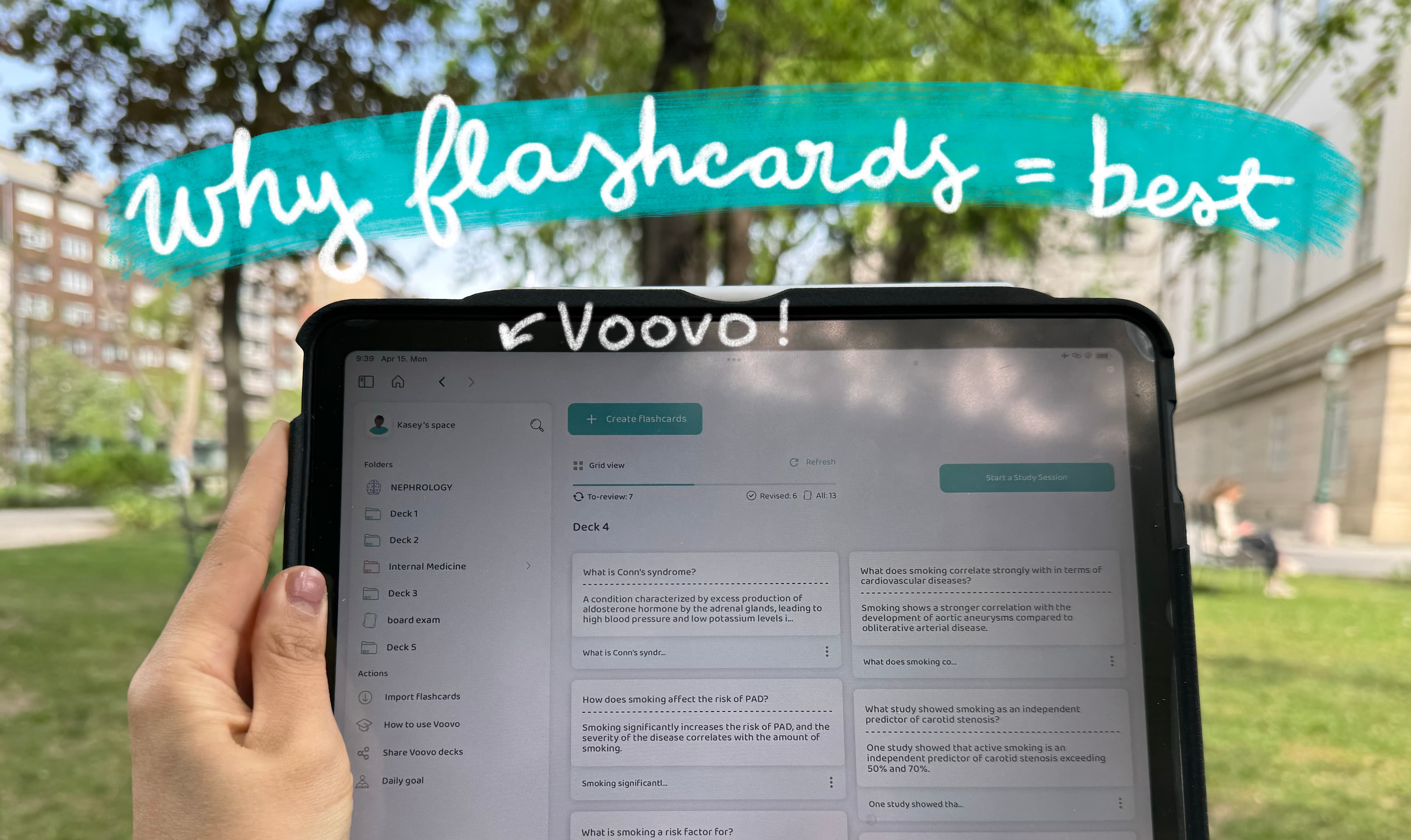 Why flashcards are the best study tool
 Use Cases & Study Tips
 7 tips to study effectively at night!Use Cases & Study Tips
 AI vs. manual flashcard creation: Why you need both for 100% accuracyUse Cases & Study Tips
 3 reasons to study languagesUse Cases & Study Tips
 5 Proven Ways to Improve Your MemoryEducation
 5 tips for faster studyingUse Cases & Study Tips
 7 tips to cope with pre-exam stressUse Cases & Study Tips


